


Do you need a specialized car seat for flying? What do you need to look for? International car seat rules explained, and our top car seat picks that are perfect for air travel
If you have small children and an upcoming family adventure, you’ll more than likely be searching for the best travel car seat, especially if you’re going to be flying to your destination; there’s a lot to consider!
Flying with infants and small children can be challenging in and of itself because there’s just so much preparation and packing involved to ensure you’re not stranded at the airport without diapers or food pouches.
If you’re looking for the perfect airplane car seat, we have you covered. In this article, we’ll tackle the basic rules of flying with car seats, features to look for in car seats for airplanes, and the best options for infants and toddlers. By the end, you’ll be well-equipped for traveling with car seats.
This post is part of our travel advice series and best travel products for kids
- TL;DR: The Best Car Seat For Travel – Our Top Picks
- Types of Travel Car Seats
- Flying With Car Seats – Rules and Options
- Alternatives to a Car Seat on Airplanes
- Features to Look for in a Good Travel Car Seat
- 2023 Car Seat Buying Guide
- Best Travel Car Seats for Infants
- Best Convertible Car Seat for Travel
- Lightest Car Seats for Travel
TL;DR: The Best Car Seat For Travel – Our Top Picks
As Amazon Associates, we earn a commission from qualifying purchases made from this page.
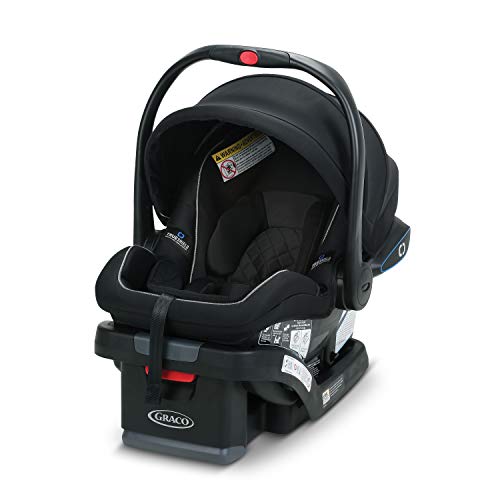
Best Rear-Facing Car Seat – Graco SnugRide SnugLock 35 LX
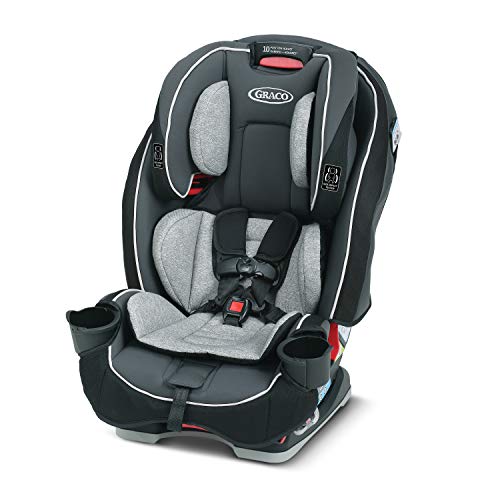
Best Convertible Car Seat – Graco Slimfit 3 in 1
Best Lightweight Car Seat – WAYB Pico Travel Car Seat

Read on below to see why these are our top picks, the features we look for in a great portable car seat, and most importantly, the rules and safety features of taking your car seat on the plane instead of traveling with lap infants.
Types of Travel Car Seats
With infant car seats, you’ll either have a rear-facing one with a base or a convertible seat – one that can convert from rear-facing to forward-facing.
If you have a car seat with a base, that’s additional bulk and extra weight you’ll have to transport through the airport if you want to use it on the airplane. It is possible to leave your base at home, but it does come down to personal preference.
When looking for a travel car seat for toddlers, your options are generally convertible or booster car seats. Convertible car seats are some of the best car seats for travel because your bub can use them from infancy through early childhood – a worthy investment. It’s important to remember that you must use the five-point harness while flying with your bub to be compliant with most airlines.
Flying With Car Seats – Rules and Options
Many aviation authorities have similar rules and guidelines when it comes to flying with car seats, but there are some subtle international differences. It’s always wise to check with any airline you’re using both to and from your destination to avoid any unwanted snags in your travel equipment plans.
Please note that we are NOT travel safety experts. We are veterans of long-haul air travel with kids but do not have medical or engineering safety qualifications. This article represents our opinions and experience only.
Do I need a car seat for flying with an infant?
The answer to this question is very much impacted by what part of the world you are from. If you’re traveling domestically within the U.S., you are not required to have a car seat if you plan on carrying your baby on your lap. This is beneficial if you don’t need a car seat at your destination or if you’ve made arrangements to acquire one upon landing.
Do note, though, if you choose not to bring an infant car seat on a U.S. airline, you DO NOT get an infant lap belt. Instead, you’ll just be holding bub in your arms without any restraint. Yes, my international flying friends, it’s true!
Airlines regulated in other countries can be different, and lap belts or car seats for infants are almost always compulsory on short haul and long haul flights. Being that there is no one international law, you’ll need to plan ahead for the journeys you’re likely to take with your babies and toddlers.

Many argue that the safest place for an infant is safely restrained in their own travel car seat – meaning you’ll need to purchase a full-price child’s seat and bring your own airline-approved car seat if your child is under two years of age.
A car seat can help protect against unexpected in-flight turbulence, and it also gives your arms a much-needed rest on a long flight. Your baby may also nap more deeply while in their car seat, which is beneficial for everyone involved.
The alternative is to use a lap belt. This can work for shorter journeys or when your infant is small, but as they grow, you’ll need to either carry them in your lap or use an airline car seat.
To throw another curveball in, many long-haul airlines offer baby bassinets (a baby bed that attaches to the wall of the airplane cabin that can be used for infant sleep during the flight). Most airline bassinets can only fit babies up to about 1 year of age which still leaves you with an issue for your bigger babies 1 to 2 years old; they will need a lap belt if sharing with an adult or book them their own seat to use a car seat.
At the end of the day, it is your call. If you feel safest when your child is fully restrained in their car seat, pay the extra for their own seat and go for it. If you have no need for the car seat at your destination and it’s simply adding yet another item to your travelling kit (not to mention cost), leave it out.
SO WHAT CAR SEAT? We have a great detailed buying guide below.
So, you’ve decided to use a car seat onboard?
Great! This is what you need to know.
Let’s assume, for argument’s sake, we are talking just about using your car seat on a U.S. airline and following FAA regulations.
Almost all popular brands are FAA-approved (which in turn, gives permission to the likes of Canadian and Australian airlines). These accepted brands include Graco, Britax, and Chicco.
Your seat should have a sticker placed by the car seat manufacturers, or you can bring your manual in case ground staff or crew members give you a hard time. The car seat should state, “This restraint is certified for use in a motor vehicle and aircraft,” but under whose standards? You’ll need to double-check this.
| Federal Aviation Administration (FAA) | European Aviation Safety Agency (EASA) | International Civil Aviation Organization (ICAO) |
| The FAA strongly recommends a Child Restraint System (CRS) or a Child Harness Device (CARES). The CRS must have an internal harness and have a flight-approved sticker. | Infants (0-24 months) must be secured in a child seat or on an adult’s lap with an ‘infant seat belt.’ Children (24 months-12 years) must be secured using the aircraft seat belt or in a child seat. Must have airline-approved sticker on CRS. | The safest way is to secure your infant or child in a State-approved CRS. Recommend checking with individual airlines for additional information. |
How do I know if it will fit the airline seat?
While car seats are increasing in size, airplane seats seem to be decreasing. Bulkhead seats with unmoveable armrests can be particularly problematic, as they do not raise to give you extra space, including your tray and TV.
It’s best to look for narrower travel car seat models, such as the Cosco Scenera NEXT. A car seat that measures under 16″ wide is a good guideline to use (but not fail-proof!)
Can you use a rear-facing car seat on an airplane?
You can use a car seat in a rear-facing position as long as it’s FAA-approved.
You might meet objections from the person sitting in front of your baby, but you’re in the right despite any problem they may have. However, I’m not sure this argument will stand firm for a long-haul flight!
I’d carefully consider other passengers’ inconvenience, too – traveling with a baby is stressful enough without a disgruntled fellow passenger who can’t recline their seat for 12 hours.
Car seats are not allowed in exit rows or anywhere that would block an exit path. For example, this means that the car seat can only be used in the window seat in a three-by-three airplane with a single aisle. The window and two middle seats can have a car seat in a broader-body aircraft with a two-four-two configuration.
The same rules apply to plane cushions that extend your toddler or infant’s seat into a bed. Whilst these products may also aid your child in sleeping on a plane, they are not of the same safety standard and are not allowed on all airlines.
You can read more about plane cushions and the list of approved airlines here.
How do I get my car seat to the airplane?
One of the trickiest parts about traveling with a car seat is getting through the airport. Only at small domestic airports have we ever had our car seat taken from us at check-in to be fitted in advance.
You will in most likely need to take it through the airport with you and board the plane with it to install yourself; no easy feat if you have kids, strollers, carry-on bags, and who knows what other ‘essentials’ to lug along with you!
Our top suggestion would be to use a wheeled car seat travel bag with four independent swivel wheels, it makes transporting your car seat a breeze and provides the best protection.

Other alternatives we’ve seen used include the Holm car seat trolley, which collapses to fit in the overhead locker (and theoretically your kid can still ride in the seat as you go through the airport), or the lightest solution is a car seat travel belt if you have a wheeled carry-on suitcase to attach it to.
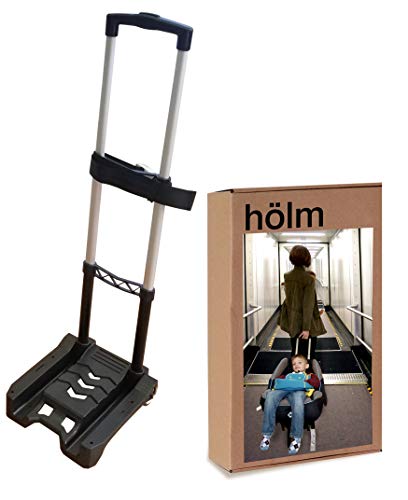
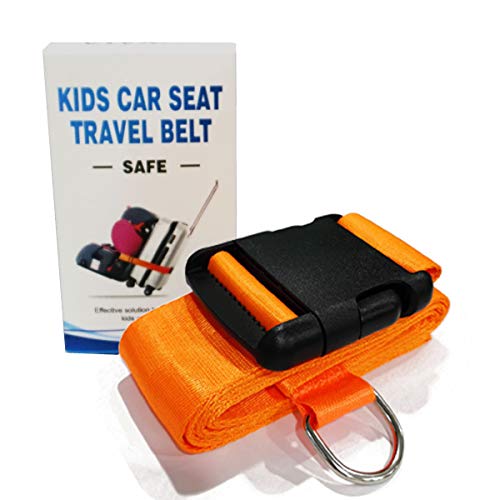
Can you use a car seat in a business or first-class seat?
Car seats don’t always work with premium airplane seating. Many First-class and business-class seats are designed in a specialized way such that a car seat cannot be properly installed. You will always need to check this with the airline in advance and the configuration of the cabin.
If there is an infant-approved seat in the cabin, there may only be a limited number available for booking due to safety reasons.
Whilst infants and children are welcome in nearly all business class cabins, you will likely need to find a different sleep solution on long-haul flights than a car seat. One plus is a flatbed business-class seat should have enough room for you and your infant to curl up together.
Can’t I just use a booster on the plane?
Unfortunately, the answer is no. Booster seats like a BubbleBum or a mifold (popular for car travel) can only be used for older kids who are almost ready to do away with car seats. They are NOT allowed to be used in flight.
However, travel booster seats such as these are small and compact enough to fit in the overhead compartment. They are best used for children four years plus – 40 pounds – if you’re up to this stage, check out these products.
The only exception is if you use the booster in conjunction with a five-point harness. Some transition boosters offer both the 5-point harness systems and a lap belt as your child grows. Always check the stickers.
Alternatives to a Car Seat on Airplanes
What if you’ll be picking up a rental car at your destination and don’t want to lug your travel system or your own car seat with you?
As long as you’ve booked your child their own seat, you can use a CARES harness on most airlines. Apart from an actual car seat, it is the only FAA-approved device. If you choose to use the CARES harness, the minimum weight is 22 pounds or 9.97 kgs.

The harness is an excellent space-saving alternative to flying with a car seat, but the drawback is that you can’t use it in a vehicle at your destination.
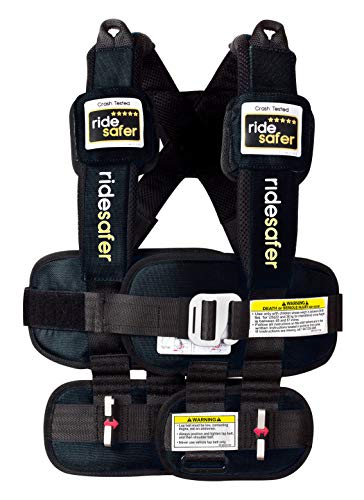
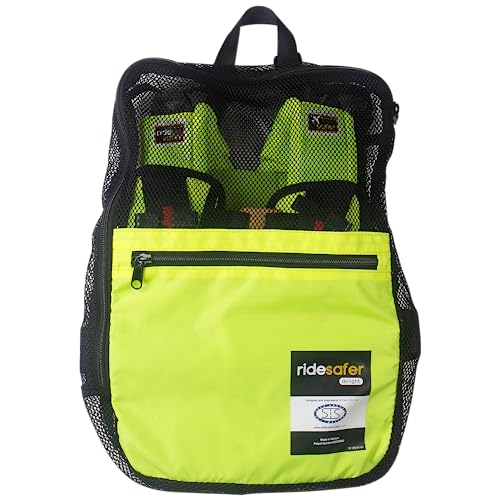
Note that the popular Ride Safer Travel Vest is not FAA-approved – it IS a great portable option, though, for taxies, Rideshare etc so we’d not discount it from your list if you’ve decided not to take a car seat on the airplane, you can still use it at your destination in place of a booster car seat.
What happens if I decide not to use the car seat on the airplane?
If you need a car seat at your destination but choose not to bring your car seat on the airplane, you’ll need to make alternate storage arrangements during the flight. Most car seats are too large to be stowed in the overhead locker, so be prepared to check them ahead of time when you’re checking your suitcases and take measures to pack and store the car seat correctly.
Don’t forget to label the seat and the carry bag, and be prepared to hunt it down in arrivals as it will most likely arrive with oversized luggage, not on the baggage carousel.
What if the crew tells me that my car seat can’t be used after I book my child a seat?
Airline staff can make mistakes too. Having the relevant FAA rules with you and the sticker visible on your car seat is best. Your original purchase manual will also help (a pain to carry, I know).
Be polite but firm if you believe you are right. Ask them to clarify their guidelines. Don’t get fired up, or risk your entire family being thrown off the flight! If they do reject the use of your car seat, it will be stowed under the plane along with strollers.
If you are worried about U.S. or international airline policies, the following resources are beneficial:
Features to Look for in a Good Travel Car Seat
Once you’ve decided you will use your car seat for flying and driving, here are the features that we look for when choosing the ideal car seat for travel:
Weight
When you’re investing in a car seat for regular car travel, weight isn’t as much of an issue because you’ll likely be keeping it in one place most of the time. In contrast, a lightweight car seat is beneficial for flying as you’ll be transporting it everywhere. A heavier selection will quickly become a burden you’ll regret bringing along.
Width
If you’ve been flying for several years, you’ve likely noticed that economy seating has become smaller and more cramped in an effort to increase capacity. The average standard width of most economy airline seats is between 17” and 18”, so your travel car seat should not exceed those measurements.
Safety
The most essential safety feature for airplane car seats is the five-point harness, as it is required by most airlines. If you’re purchasing a used car seat specifically for air travel purposes, you’ll also want to ensure that it has not surpassed its expiration date.
Durability
Even if you invest in a car seat cover for air travel, your car seat is bound to get jostled and bumped around in transit. The least expensive travelling car seat is not always the best route to go, as this can often result in weaker construction.
Cost
Most infant car seats range from around $100 to a whopping $500 for the top of the line models. It might seem like a hefty investment, but if you’re a frequent traveling family, it will be one of the most worthwhile infant gear investments you will make, particularly if you choose a brand that can see them from newborn through to toddler.
So, what sort of car seat should I get?
Great question! If you would like a car seat that works well for both car and air travel, check out our selections below for the best car seats for travelling.
2023 Car Seat Buying Guide
We have summarised some of the top brands here, but read on for more details on each and when it would be best to use them for your child’s age and stage:
| Product | Brand | Orientation | Dimensions/Seat Weight | Child Weight Range |
|---|---|---|---|---|
  | Graco SnugRide SnugLock 35 LX Infant Car Seat | Rear-facing only | 30.87" x 19.96" x 15.51" 9.75 lbs | 4-35 lbs |
  | Doona Infant Car Seat & Latch Base | Rear-facing only | 28" x 20.5" x 18" 16.5 lbs | 4-35 lbs |
  | Safety 1st Onboard 35 LT Comfort Cool Infant Car Seat | Rear-facing only | 30.5" x 18" x 15.75" 14.99 lbs | 4-35 lbs |
  | Evenflo LiteMax Infant Car Seat | Rear-facing only | 18.3" x 17.8" x 30" 16 lbs | 4-35 lbs |
  | Safety 1st Grow and Go All-in-One Car Seat | Rear-facing and forward-facing | 31.75" x 19.25" x 28.75" 18.66 lbs | 22-65lbs |
  | Cosco Apt 50 Convertible Car Seat | Rear-facing and forward-facing | 26" x 20" x 24" 11 lbs | 5-50 lbs |
  | WAYB Pico Toddler Travel Car Seat | Front-facing | 14.96" x 11.02" x 20.08" 8 lbs | 22-50 lbs |
  | SureRide Convertible Car Seat | Rear-facing and forward-facing | 19" x 19" x 28.5" 9.8 lbs | 5-65 lbs |
  | Graco Tranzitions SnugLock 3 in 1 Harness Booster Seat | Front-facing | 17.4" x 19" x 26.5" 15.1 lbs | 22-65 lbs |
Best Travel Car Seats for Infants
Best Travel Car Seat for Infants: Graco SnugRide SnugLock 35 LX Infant Car Seat
Why we love it: The Graco SnugRide is one of the most lightweight baby seats for airplanes you can find. The base adjusts in four different ways, allowing you to customize the fit in either your car or while flying.
Essential Specs:
- Dimensions: 30.87 x 19.96 x 15.51 inches
- Weight: 9.75 lbs
- Approved for Flying: FAA-approved
- Orientation: Rear-facing only
- Weight Range: 4-35 lbs
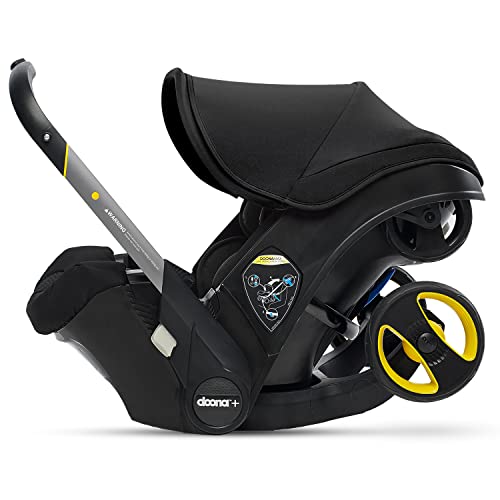
Runner Up: Doona Infant Car Seat & Latch Base
Why we love it: The Doona Infant Car Seat has a feature that most car seats lack–it’s both a seat and stroller in one! That alone makes the Doona highly desirable as one of the best car seats for traveling, as that means you can leave a possibly bulky stroller at home.
Essential Specs:
- Dimensions: 28 x 20.5 x 18 inches
- Weight: 16.5 lbs
- Approved for Flying: TUV and FAA-approved
- Orientation: Rear-facing only
- Weight Range: 4-35 lbs
Possible Drawback: The Doona is on the pricier side, and the additional width due to the stroller wheels may make it a tight squeeze on the airplane. But as an all-rounder which ticks as many boxes as possible, we love it!
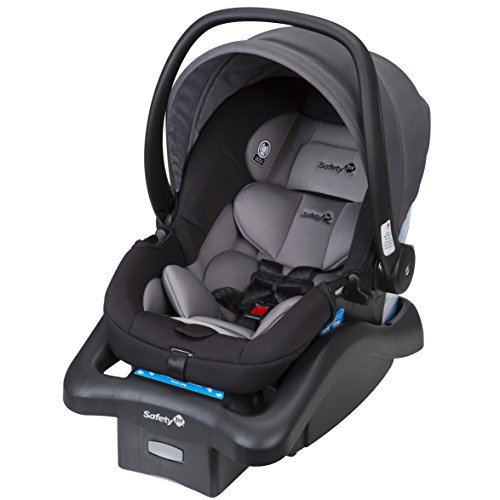
Also consider: Safety 1st Onboard 35 LT Comfort Cool Infant Car Seat
Why we love it: The Safety 1st Infant Car Seat comes at a very reasonable price and comes with Comfort Cool padding to help regulate your baby’s body temperature. As we all know, airline thermostats seem to be several degrees off from the norm.
Essential Specs:
- Dimensions: 30.5 x 18 x 15.75 inches
- Weight: 14.99 lbs
- Approved for Flying: FAA-approved
- Orientation: Rear-facing only
- Weight Range: 4-35 lbs
Possible Drawback: As far as durability goes, this car seat may not hold up long-term as well as others in its class, but unless you’re a frequent flying family, your child will probably outgrow the seat before this is an issue.
Also consider: Evenflo LiteMax Infant Car Seat
Why we love it: As the title implies, the Evenflo LiteMax is a very lightweight car seat, making it a very travel-friendly choice. The ergonomic handle also makes carrying less burdensome for you.

Essential Specs:
- Dimensions: 18.3 x 17.8 x 30 inches
- Weight: 16 lbs
- Approved for Flying: FAA-approved
- Orientation: Rear-facing only
- Weight Range: 4-35 lbs
Possible Drawback: For parents used to more luxury in their car seats, this one does seem a bit bare-bones when it comes to additional features. It could make a good choice as an additional seat reserved just for vacations.
Best Convertible Car Seat for Travel
If you want a car seat that will last from infant to toddler years, you need to invest in a convertible car seat – that means it can be rear-facing and a forward-facing seat.
Best Overall Convertible Car Seat: Graco SlimFit 3 in 1 Car Seat
Why we love it: The Graco SlimFit’s compact design makes it both car and airplane travel-friendly, and the four-position recline features are a plus when installing it on the airplane.
Essential Specs:
- Dimensions: 21.5 x 19.9 x 25.5 inches
- Weight: 19.47 lbs
- Approved for Flying: FAA-approved when using 5-point harness
- Orientation: Rear-facing and forward-facing seat
- Weight Range: 5-65 lbs
Runner Up: Safety 1st Grow and Go All-in-One Car Seat
Why we love it: The Safety 1st Grow and Go is on the lighter side as far as convertible car seats go, which will make transporting it less of a hassle. Its design also allows for extra room in front, which your fellow traveler in front of you on the airplane will appreciate.

Essential Specs:
- Dimensions: 31.75 x 19.25 x 28.75 inches
- Weight: 18.66 lbs
- Approved for Flying: FAA-approved when using in harness mode
- Orientation: Rear-facing and forward-facing
- Weight Range: 22-65 lbs
Possible Drawback: Although this convertible car seat offers extended space front-wise, the wider base is not as desirable for air travel.
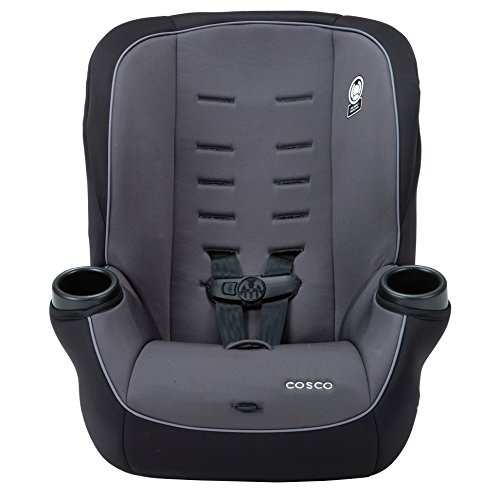
Best Budget Convertible Car Sear: Cosco Apt 50 Convertible Car Seat
Why we love it: At just 11 lbs, the Cosco Apt 50 is a good option for a lightweight and convertible car seat. It has an easily adjustable 5-point harness and machine washable cover as well.
Essential Specs:
- Dimensions: 26 x 20 x 24 inches
- Weight: 11 lbs
- Approved for Flying: FAA-approved
- Orientation: Rear-facing and forward-facing
- Weight Range: 5-50 lbs
Possible Drawback: The car seat only has two modes, so you’ll have to find additional options once your child surpasses 50 lbs.
Lightest Car Seats for Travel
Weight really matters when you’re weighed down with little ones, so here are some of the lightest 5 point harness options to consider when choosing a travel car seat.
Best Overall Light Travel Car Seat: WAYB Pico Travel Car Seat
Why we love it: The WAYB Pico Car Seat is one of the best car seats for travelling due to its lightweight and foldable design. It’s an excellent option for toddlers and older children and can be used for both car and air travel.
Essential Specs:
- Dimensions: 14.96 x 11.02 x 20.08 inches
- Weight: 8 lbs
- Approved for Flying: FAA-approved
- Orientation: Front-facing
- Weight Range: 22-50 lbs
Possible Drawback: Although a highly desirable lightweight car seat, the WAYB Pico is also one of the most expensive choices.
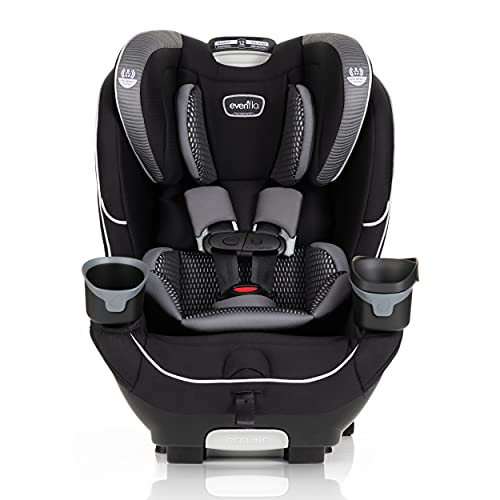
Runner Up: Evenflo SureRide Convertible Car Seat
Why we love it: The Evenflo SureRide comes in at under 10 pounds, making it a more convenient travel car seat option than its competitors. It also has three layers of energy-absorbing foam for increased protection and comfort.
Essential Specs:
- Dimensions: 19 x 19 x 28.5 inches
- Weight: 9.8 lbs
- Approved for Flying: FAA-approved
- Orientation: Rear-facing and forward-facing
- Weight Range: 5-65 lbs
Possible Drawback: The shoulder straps tend to rattle when your child is not in the seat, which can be distracting while driving.
Also consider: Graco Tranzitions SnugLock 3 in 1 Harness Booster Seat
Why we love it: This is an ideal booster seat option due to the 5-point harness system, which many booster seats lack. The quick SnugLock technology also allows you to install the seat in about a minute, and the headrest adjusts without rethreading the harness.

Essential Specs:
- Dimensions: 17.4 x 19 x 26.5 inches
- Weight: 15.1 lbs
- Approved for Flying: FAA-approved when using 5-point harness mode
- Orientation: Front-facing
- Weight range: 22-65 lbs (harness booster) (40-100 lb) (highback and backless booster)
Possible Drawback: The latch strap can be difficult to tighten due to its placement on the car seat. You’ll need to double-check this after installation.
We hope this has helped you in deciding whether flying with a car seat is right for you. Unquestionably, if you are driving anywhere with an infant or a toddler, you need a car seat. Adding flying into the mix though really does present some challenges for family travellers, so go with the flow and chosoe what’s right for you and your circumstances.
More Handy Guides for Traveling With Your Kids?
We have traveled across the continents with our kids for the past 13 years. Some bits of baby and toddler travel kit are definitely more useful than others! Here are just some of the pieces of travel gear we recommend you invest in:
- A carrier for your toddler, especially if you are traveling in busy places where strollers could be more of a hindrance than a help, this was by far our most used item when we traveled with infants and toddlers.
- Compact travel stroller – The slimline design of these compact strollers is revolutionary! They are so small you can even take them on the plane with you.
- Compact & lightweight double stroller – For the few years when our young children’s ages closely overlapped and we had both infants and toddlers to carry, our double stroller was a life-saver!
- A portable travel cot – To make sure everyone gets a good night’s sleep when you travel, we look at simple baby sleep pods through to larger travel cots and infant sleep solutions.
- A durable and adaptable diaper bag-cum-backpack for fitting all your family gar from diapers to snacks and everything in between. Invest well at the start, and this bag could last your family years.
- Car seat travel trays – an ideal addition for long drives, keep all your kids’ toys within arm’s reach and organized, as well as give them a flat surface to eat and drink from.
Don’t miss our complete guides to the best baby travel essentials and the best toddler travel essentials.
Sign up to our mailing list and you can also receive our complete family packing list collection helping you prepare for your family adventures – however near or far from home.

Helpful? Bookmark this page for later or save it to Pinterest


Disclosures: We are participants in the Amazon Services LLC Associates Program, an affiliate advertising program designed to provide a means for sites to earn advertising fees by advertising and linking to Amazon.com. You can read our full disclosure policy here.
© Our Globetrotters | Feature Images CanvaPro